Article
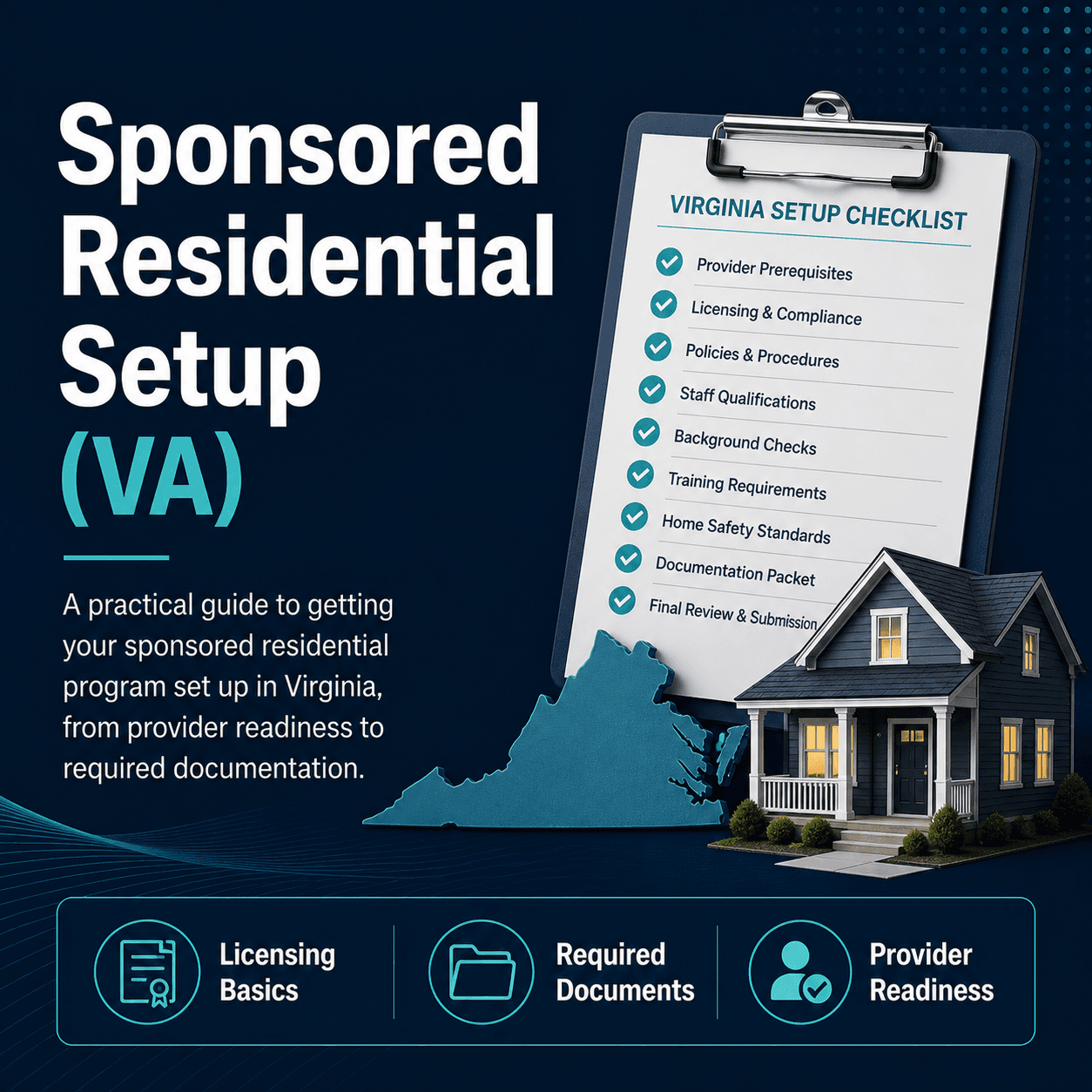
Sponsored Residential Setup Checklist for Virginia Providers
Sponsored Residential is one of Virginia's most flexible DD waiver services — and one of the most paperwork-heavy to set up. This is the checklist that gets your first sponsor home licensed.

CareHub by DSPlife
·3 min read
Sponsored Residential is the Virginia DD waiver service that lets an individual live with a family in the family's home, with the family receiving training and stipends to provide support. It's a phenomenal service for the right individual — and it has a paperwork load that catches new providers off guard.
Here is the setup checklist that consistently gets first sponsor homes licensed without delay.
Step 1: Sponsor screening and selection
Not every family that wants to be a sponsor should be one. Before you start paperwork, screen for:
- Stable housing (own or long-term lease, no recent moves, no eviction history)
- No prior CPS or APS involvement
- Adequate space — bedroom for the individual that meets DBHDS minimum square footage
- Genuine willingness, not financial desperation
- Family medical/legal status (no active warrants, no acute mental-health crises)
A provider that places its first individual with the wrong family loses the renewal regardless of paperwork quality.
Step 2: Sponsor home application and licensing
The sponsor home itself becomes a licensed location. You'll need:
- Floor plan with bedroom dimensions
- Photos of every room, including kitchen, bathroom, and individual's bedroom
- Copy of lease or deed
- Local zoning sign-off (if required by jurisdiction)
- Smoke detector and CO detector locations
- Fire safety inspection (some localities require)
- Health department inspection if more than two unrelated individuals
- Background checks for every adult in the household (BCI, FBI, CPS, APS)
DBHDS will inspect the home before licensing. Walk through with the sponsor a week before to fix anything obvious.
Step 3: Sponsor training and certification
Sponsors must complete:
- DBHDS-approved orientation training
- CPR and first aid (current within 1 year)
- Medication administration training (if they will administer meds)
- Abuse and neglect prevention
- Behavior support training (if individual has BSP)
- Specific health-condition trainings as required by the individual
Document each training with sign-in sheet, agenda, and certificate.
Step 4: Individual placement and ISP integration
When you place an individual:
- The ISP must be updated to include sponsor home as the residential setting
- Emergency contacts updated
- Service authorizations re-issued for sponsored residential rate
- A back-up plan documented for what happens if the sponsor family is unavailable
- Family of origin consents and is notified
Step 5: Ongoing documentation
A licensed sponsored residential setting requires:
- Monthly progress notes by the QIDP
- Quarterly reviews with the sponsor, individual, and team
- Daily notes (sponsor-written)
- Med administration logs (if meds are delegated)
- Incident reports per DBHDS categories
- Annual re-certification of the sponsor home
Common DBHDS findings on sponsor homes
- Sponsor training records missing or expired
- Background checks not re-run at the 5-year mark
- Daily notes too short or templated
- ISP not updated when sponsor changed
- No documented back-up plan when sponsor is unavailable
Where CareHub fits
CareHub's Sponsored Residential setup includes a sponsor-home onboarding checklist that walks you through every required document, automatic re-certification reminders, daily-note templates designed for sponsor families (not institutional staff), and integrated incident reporting that routes to your provider QIDP.
Start a free 14-day trial — or download our Sponsored Residential setup checklist as a printable PDF.
Share this article
Help another DD-waiver provider find this.
One short, useful email per week
State regulatory bulletins, customer wins from real DD-waiver providers, a free resource in each issue. One-click unsubscribe.
Keep Reading
More from the CareHub blog
Article
The MAR Errors That Fail a DBHDS Medication Audit (and How to Prevent Them)
The Medication Administration Record is the second thing a DBHDS surveyor pulls after daily notes. Here are the MAR mistakes that draw citations — blank boxes, PRN follow-ups, controlled-count gaps, undocumented refusals — and how to close them before your annual review.
Read articleArticle
Choosing an IDD EHR: The Buyer's Checklist
Most IDD EHR demos look the same for the first twenty minutes. Here is the checklist that surfaces the differences that actually matter — pricing model, what's included, compliance depth, migration, and audit-readiness.
Read articleArticle
ISP Part V (Plan for Supports), Section by Section
The Part V / Plan for Supports is the operational heart of the ISP — the part staff actually document against. Here is what belongs in each section, and what a reviewer checks when they read it.
Read article